The inspection is where you earn the savings. Here's how to do it right.
Buying used equipment or surplus material at around 25% below retail is a good deal — as long as what you're buying is what the listing says it is. Take the time to check it before you hand over anything.
Used Equipment & Machinery
Run it. Work it through its full range. If the seller won't let you start it up, that tells you something.
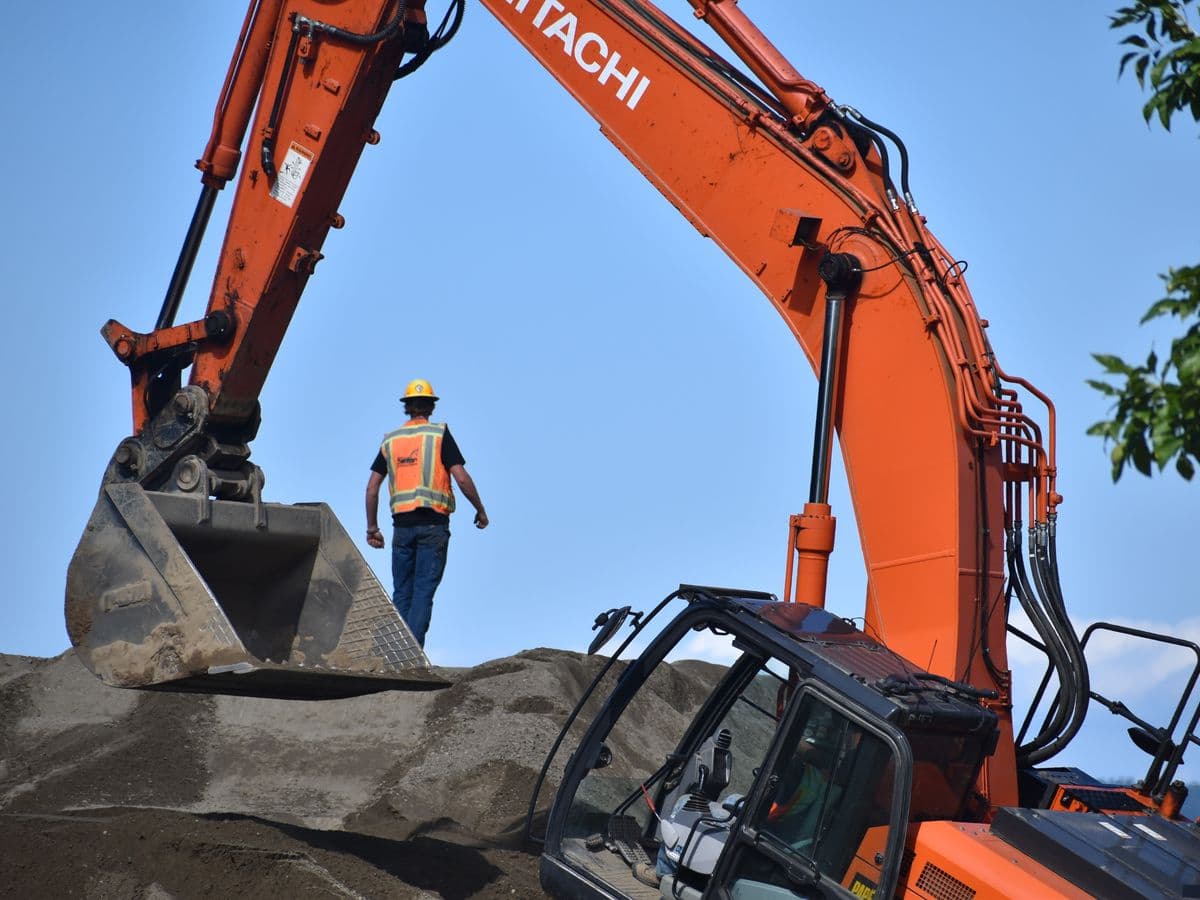
Start and Operate
- Start it cold if possible — a machine that only starts warm may have a starting system issue.
- Run it through its full range of motion (bucket, boom, blade, forks — whatever applies).
- Listen for unusual sounds: knocking, grinding, or excessive rattling during operation.
- Check throttle response and verify it reaches rated RPM.
- Test all hydraulic functions under load — watch for sluggishness, drift, or jerking.
Hours & Condition
- Check the hour meter or odometer against what's in the listing — a significant discrepancy is a red flag.
- Note the hours relative to the machine type: 2,000 hours on a mini excavator is different from 2,000 hours on a large crawler.
- Inspect the overall condition relative to the stated hours — excessive wear for low hours suggests the meter has been tampered with.
Mechanical & Structural
- Inspect the undercarriage: tracks, rollers, idlers, and sprockets (on track machines) — these are expensive to replace.
- Check tires for wear, cracking, and uneven tread (on wheeled equipment).
- Inspect hydraulic lines and cylinders for leaks, abrasion, and fitting condition.
- Check belts: cracking, glazing, and proper tension.
- Check fluid levels and condition — engine oil, hydraulic fluid, coolant — color and smell matter.
- Look for evidence of overheating: discoloration around the radiator, coolant residue, or scorched paint.
- Inspect welds on the frame and attachments — cracks or poor repair welds indicate past stress or damage.
- Look for rust-through — surface rust is cosmetic, but rust-through is structural.
- Check all pins and bushings for excessive play.
Safety Systems & Gauges
- Confirm all gauges and warning lights function (check at startup).
- Test lights, horn, and backup alarm if applicable.
- Verify that ROPS/FOPS (rollover and falling-object protection) is intact and undamaged.
- Test the seatbelt and operator restraints.
- Confirm the fire extinguisher mount is present if required by spec.
Surplus Materials
Surplus material is often perfectly usable — it just needs to be what the listing says it is, in the quantity and condition described. Verify before you load it.
Quantity & Specs
- Count it. Don't assume the listed quantity is accurate — short pallets happen, especially with loose material.
- Verify dimensions: confirm length, width, thickness, or other specs match the listing and your project requirements.
- Check grade or specification markings on the material itself (grade stamps on lumber, ASTM markings on steel, etc.).
- Confirm the material is the species, alloy, or product type listed — especially where substitution affects structural or code compliance.
Condition by Material Type
- Lumber & engineered wood: Look for warping, checking, end splits, rot, mold, and pest damage. Sniff for moisture or mildew. Improper storage causes warping.
- Steel & metal: Surface rust is usually cleanable; pitting, scaling, or rust-through compromises the section. Check cut ends for corrosion depth.
- Masonry (block, brick, pavers): Look for cracks, spalling, and freeze-thaw damage. Check that the lot is consistent — mixed runs or colors will show in the finished work.
- Roofing & waterproofing: Check for UV degradation (brittleness, surface crazing), physical damage, and proper sealing of opened rolls or bundles.
- Electrical & conduit: Verify wire gauge and insulation condition. Check conduit for crush damage. Confirm breakers are the right amp rating and not discolored from repeated tripping.
- Insulation: Check for moisture (compressed fiberglass, wet rigid foam). Verify R-value markings. Inspect vapor retarder facings for tears.
Lot Consistency & Storage
- Walk the full lot — don't just look at the top layer or the front of the stack.
- Ask how it was stored: inside vs. outside, how long, and on what.
- For long-term outdoor storage, ask whether it was tarped and inspect for UV or water damage accordingly.
- Confirm lot consistency — material from different production runs may not match in color, dimension tolerances, or performance.
Paperwork & Ownership
For titled equipment, paperwork isn't optional. A clean title is worth more than you think — and a dirty title is a problem you do not want to inherit.
For All Equipment
- Ask for any available service records — regular maintenance is a strong positive signal.
- Request the operator's manual if available; a missing manual is a minor inconvenience but worth noting.
- Get the serial number or VIN in writing, and confirm it matches the physical plate on the machine.
- If attachments are included, confirm they are listed on the title or bill of sale.
For Titled Equipment (vehicles, trailers, certain heavy machinery)
- Confirm the seller can produce the title before you travel to inspect — if they can't locate it, that's a problem to solve before the deal closes.
- Verify the name on the title matches the person selling it to you; if it doesn't, get a clear explanation and decide whether you're comfortable proceeding.
- Check that the title is clean (no lien notations) — a lien means a lender has a claim on the equipment and the title can't transfer cleanly until it's satisfied.
- Run the serial number or VIN against any theft or lien database you have access to.
- For out-of-state titles, check your state's DMV requirements for re-registration before assuming it's a simple transfer.
- Have the seller sign the title in the correct field at the time of transfer — do not accept a pre-signed blank title.
Bill of Sale
- For non-titled equipment, a signed bill of sale is your ownership record — get one in writing.
- The bill of sale should include the date, a full description of the item (make, model, serial number), the agreed price, names and contact information for both parties, and the seller's signature.
- Keep a copy — this is your proof of purchase if a question of ownership arises later.
When to walk away.
If the seller won't let you run the equipment before you pay, walk away. If the quantity is significantly short of the listing and the seller is dismissive about it, walk away. If the title has a lien that the seller says is "being handled" but can't document, walk away. If something about the deal feels off and you can't put your finger on it, trust that instinct — the savings aren't worth a machine that doesn't work, material you can't use, or an ownership dispute you inherit.
There will be another listing. The platform adds new inventory every day.
More resources for buyers.
Before you go:
- Safety Tips — how to protect yourself before, during, and after the transaction.
- How Buying Works — the full five-step buying process from search to close.